

The power of good flavour
Food, who doesn’t like it? Especially when our customers are on holiday, they love to try local dishes, prepared like “only the locals can”. As a hotel, you can have a lot of impact on your visitors, the local community, and the environment by including healthier and more-sustainable food items on your menu. Here’s everything you need to know about adding extra servings of green to your line-up…
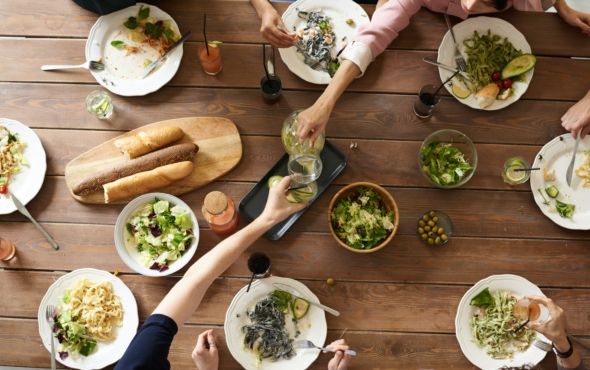
Your guide to…implementing healthier & more-sustainable food
Certified labels
Are all tea, coffee, sugar and cocoa products offered to your guests sustainable and Fairtrade certified*? Widely recognised certifications for these products include Fairtrade International, Rainforest Alliance, UTZ, Bonsurco, Ethical Tea Partnership membership and Fair for Life.Local products
Purchase your fresh fruit and vegetables, meat, fish and dairy products from local producers. Locally means manufactured, grown or supplied food products from the region in which your hotel operates. Hotels should ideally source food as close to their location as possible. Besides supporting local entrepreneurs, it also reduces your environmental footprint, and due to the short distance, local often also means buying fresh products, which in turn enhances the customer experience.Vegan included
Does the guest menu already feature plant-based dishes or ingredients? This means food exclusively made with plants are included, such as plant-based burgers, soy and rice, alongside other meat-containing options. Ask your master chef to look for alternatives for sauces or condiments which exclude things like fish, eggs or dairy products. This helps to ensure all your guests who identify as either vegetarian or vegan have more variety, which can help greatly improve the inclusivity of your hotel.Something fishy
Do you exclusively use fish from certified sustainable fishing practices, such as the Maritime Stewardship Council (MSC)? MSC certification is widely recognised to identify that a fish product or fishery has met the international best practice for sustainable fishing practices. Another wildly recognised certification is the dolphin-safe label, which demonstrates that the fish was obtained through methods that minimise dolphin fatalities.Certifications for free-range eggs vary around the world and standards may be specified by national legislation in the country your hotel operates in. There are a number of well-recognised labels within Europe which include, Agrovet certificated, RSPCA Assured and A Greener World standard.
Low-calorie food
Some guests are on strict diets, not because they want to lose weight, but due to medical reasons. Therefore, it’s recommended to put low-calorie food on your menus, along with dairy-free and gluten-free food.Organic food
In case you haven’t got it included in your hotel menus yet, start adding organic local products to your offering. Organic means fruits and vegetables have not been grown using chemical fertilizers or pesticides, only natural methods. Organic meat means the animals have only been fed with organic food, which is much better for their health, as well as your customers when they eat the meat. Organic foods also contribute to a higher soil fertility and living organisms, which in turn helps support local biodiversity.Local cuisine
Aside from getting their hands on the local cuisine, one of people’s favorite kinds of activities while on holiday is workshops or cooking classes that involve preparing a typical local dish. Add them to your daily activity program if you don’t offer them already. Plus, you could even organise an excursion to a local market where you buy the products customers will use during the workshop together. Besides promoting the local cuisine, it also gives customers a chance to immerse themselves in the local culture.Reduce food waste
Food waste is one of the biggest ongoing issues worldwide. As hotel, you can measure food waste by weight or volume. It can also be useful to understand waste composition (what types of food is the waste made up of) to inform the setting of realistic reduction targets. Food waste tends to fall into three main categories:- Kitchen waste – this includes peelings and preparation waste together with any out of date and inedible food (essentially all food which does not reach the public)
- Buffet waste – this is the food that’s presented on the buffet counter but not selected or consumed during a buffet sitting (i.e. the food remaining on the hotplates / salad bar etc. at the end of service)
- Plate waste – this is the food left on a customer’s plate when they have finished their meal
Understanding waste within each of these categories can help inform actions to reduce it. For example, large amounts of plate waste may be a reflection of a dish that is consistently poorly prepared (indicating a need for staff training) or issues around portion size (for example large plate sizes which encourage guests to take more than they can eat at buffets).
Inform your guests
It’s great that you are serving more local products, low calorie, and even vegan food. But don’t forget to communicate it to your guests. Take a look at this great manual about Sustainable Food Communication Manual, which has been developed by Futouris and contains some excellent examples of how to keep your customers informed about your sustainable food efforts.Start a vegetable garden
To work alongside your hotel’s restaurant or café, you might consider to start growing your own vegetables and herbs. Whether you have a large garden or a small rooftop, there are multiple advantages to starting this. And again, don’t forget to communicate it towards your guests. You can also use organic food waste from your kitchen for composting in this vegetable garden to close the loop and make the whole process more circular. Take a look at the best practices below to get some inspiration.Best practices
Fresh from the harvest – TUI Blue Oceanis Beach & Spa Resort (Greece)
You can hardly get your meal any fresher than at this hotel. TUI BLUE Oceanis Beach & Spa Resort has had its own farm since 2012. This started on a small scale, but has grown to 215 hectares in 2017. 45 different types of plants grow on the farm, of which the harvest is of course used in the restaurant. Also the organic wine and extra virgin olive oil comes from their own soil. Do you want to reminisce about your vacation at home, you can buy your own bottle of deliciousness in the hotel’s mini super.
Bismillah! - RIU Tikida Garden (Morocco)
At RIU Tikida Garden you can feast on all the delicious food all day long, but they also have an eye for food waste. In the restaurant, where a lot of local products are used, you will find ‘on the spot’ cooking stations. The chef conjures up your portion in the right proportion on your plate. Although RIU Tikida Garden is located in the middle of Marrakech, the environment is surprisingly green due to the large beautiful garden surrounding the hotel.