
Introduction
Globally, energy is primarily supplied through fossil fuels. Not only is this a finite source that will eventually run out, but the burning of fossil fuels is also a huge contributor to global warming through the emitted greenhouse gases. Another natural resource with great effects is fresh water, which is essential for daily life but is becoming increasingly scarce. Put simply, the careful use of both energy and water is necessary to help future-proof your business while caring for your local environment.
Your guide to… efficient energy & water use
Monitoring
It is crucial to actively monitor water and energy use on a regular basis and investigate any increases. It can be a simple as comparing your bills on a quarterly basis, but monthly, daily or real-time monitoring is better. You can use the insights for setting reduction targets or for detecting problems. This will prevent having high operational costs, and equally reduce your carbon footprint.Go energy efficient
Energy saving lighting can last up to 45 times longer and use up to 90% less energy than traditional lamps and can emit significantly less heat (helping your air conditioning costs too). When selecting your lamps, think about the lighting needs in different areas of your building and match the lamp to the task.Let the sun shine in
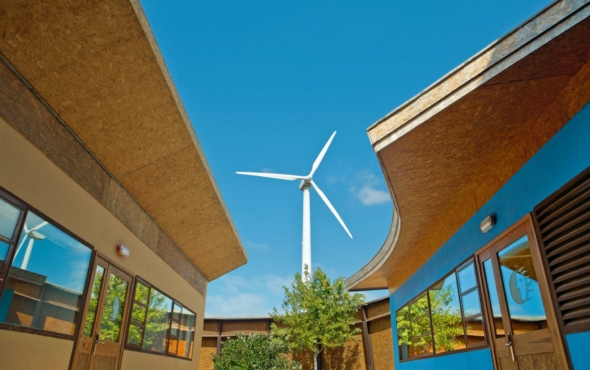
A move towards renewable energy will also help future-proof your business and is increasingly available on very competitive tariffs in many countries. You could also consider your our own on-site energy generation (for example, via solar, PV, wind), which can often have attractive payback periods as the cost of the technology has lowered.Green gardens
There are simple ways to avoid wasting fresh water when watering your gardens. You can also collect rainwater and use this, or use appropriately treated wastewater. Other ideas are to design your landscaping with drought resistant plants, use native plants, apply mulch and irrigate during the night.Low flow is the way to go
The installation of low-flow or dual flush toilets, smart showers or low-flow showerheads will cut your water consumption and costs. It’s also easy to retrofit taps with flow reduction tap inserts that use less water. Many hotels are now installing drinking water fountains – these reduce the need for bottled water, which will also reduce plastic waste.Guests
Provide information among your guests about why it is important to save water and energy and encourage them to do so. You can also make it simple and easy for them through devices such as smart key cards, which automatically switch off heating and air conditioning when guests are not in the room.Employees
Just like your guests, your employees also need to have clear information on how they can save water and energy and need to feel inspired to do so. For example, you can easily train them on how to plan the watering times for the gardens, or how to minimise water usage during cleaning, for instance by using a mop instead of a hose when cleaning the floor.Pools
Make sure that you clean your pools in a way that reduces water wastage, for instance through clear operational procedures and regular filtration maintenance. Also, check for any leaks and keep the pool and filters clean in order to reduce the need for backwashing. Lower the level of pool water in order to reduce losses through splashing.Construction
In terms of isolation (and energy reduction) you can adopt white roofs, green roofs or well-insulated roofs, as applicable to your local climate. High-performance glazing can be installed to reduce heat transfer between the inside and outside. Incorporating shading or solar films can also reduce the need for cooling and heating.Towels and bed linen
Last but not least, it’s well-known that towel and bed linen reuse programmes reduce water and energy use but to be successful, you must encourage both housekeeping and guests to participate. Also make sure you optimise your laundry operations in order to avoid wasting water. For example, by washing full loads, pre-treating stains and using friction/laundry balls.Best practice examples
Drinking sea water – ROBINSON Club Maldives
Drinking sea water? The asset of ROBINSON Club Maledives comes simply from nature. After the water is desalinated and drinkable, carbon dioxide and minerals are added. The fresh sparkling water can be consumed from refillable glass bottles. This has eliminated the need to manufacture, transport and dispose of 400 000 plastic bottles each year.
Enjoy your shower - TIME TO SMILE Chogogo (Curacao)
Another example, the showers at TIME TO SMILE Chogogo Dive & Beach Resort are set to flow no more than 4.5 liters of water per minute. This is measured without reducing the comfort for the guests. The water is then filtered and reused for watering the garden.
Solar panel roof – ROBINSON Club Agadir (Morocco)
One of the largest solar panel parks of Morocco is situated on the roof of Robinson Club Agadir. Mother Nature warms the pool water and the water in your bathroom with for you! Around 70% of the required electricity in the entire resort is provided by the solar panels.
Smart air conditioning – RIU La Mola (Spain)
At RIU La Mola sensors are used to turn off the air conditioning when a window or door is open. Geothermal air conditioning is used whenever possible; this technology is 400% more efficient than conventional air conditioning systems, cool huh?